
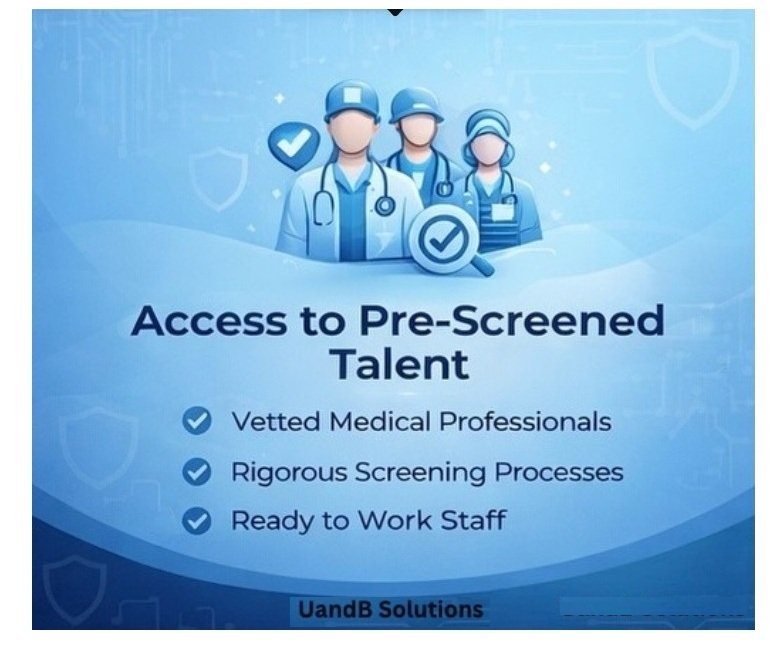
Introduction: Why Vetting Matters in Modern Healthcare
In an era where patient safety hinges on the competence and reliability of clinical staff, healthcare facilities can no longer afford the luxury of lengthy onboarding periods or the risk of misaligned hires. The demand for qualified medical professionals has reached unprecedented levels, yet the stakes for improper credentialing have never been higher. A single oversight in verification can result in catastrophic malpractice claims, regulatory sanctions, and—most importantly—compromised patient outcomes.
This is where pre-screened medical talent pools and rigorous screening services have revolutionized healthcare staffing. These specialized services function as human resource gatekeepers, deploying multi-layered vetting architectures that extend far beyond basic background checks. By the time a physician, nurse, or allied health professional reaches your facility through these channels, they have already survived a gauntlet of credential verification, competency assessments, behavioral evaluations, and ongoing monitoring protocols.
The shift toward pre-vetted talent represents more than operational efficiency; it embodies a fundamental reimagining of workforce readiness in medicine. When a cardiovascular surgeon walks into your operating theater or a critical care nurse reports for their first night shift, the assumption of competence must be absolute, not aspirational. Rigorous pre-screening transforms hiring from probabilistic gambling into deterministic quality assurance.
The Crisis of Credentialing: Understanding the Market Imperative
The healthcare industry faces a paradoxical crisis: acute staffing shortages coupled with increasingly complex compliance requirements. According to recent workforce analyses, the United States alone faces a projected deficit of 124,000 physicians by 2034, while the nursing shortage could reach 450,000 professionals. Simultaneously, accreditation bodies like The Joint Commission (TJC), the National Committee for Quality Assurance (NCQA), and state medical boards have tightened credentialing standards, creating a verification bottleneck that delays hiring by an average of 90–120 days.
Traditional recruitment models place the burden of verification entirely on the hiring institution. Hospital credentialing offices must verify medical school transcripts, residency training, board certifications, malpractice histories, and peer references—a process that consumes hundreds of administrative hours per candidate. During this lag, patient census pressures mount, existing staff experience burnout, and revenue walks out the door.
Pre-screened talent services disrupt this model through credentialing arbitrage—performing exhaustive verification upstream so that facilities receive “plug-and-play” professionals who require only facility-specific orientation rather than foundational competence validation.
The Anatomy of Pre-Screened Medical Talent
Pre-screened medical professionals represent a distinct category of workforce readiness. Unlike traditional agency staff who may have undergone minimal checks, these candidates have passed through primary source verification (PSV) systems that confirm every credential directly with the issuing institution.
Defining Characteristics of Pre-Vetted Professionals:
Tier 1 Verification Status
-
License validation through state medical boards and Nursys (national nurse database)
-
DEA (Drug Enforcement Administration) certification verification with schedule-specific authorizations
-
OIG (Office of Inspector General) and SAM (System for Award Management) exclusion list screening
-
NPDB (National Practitioner Data Bank) query for malpractice payments and disciplinary actions
Tier 2 Competency Validation
-
Specialty-specific clinical assessments (e.g., ACLS, BLS, PALS certification for critical care)
-
Skills checklists validated by specialty nursing societies or medical academies
-
Medication administration tests with 95%+ accuracy requirements
-
Simulation-based scenario testing for high-acuity situations
Tier 3 Professional Character Assessment
-
Structured behavioral interviewing against core competency frameworks
-
Peer reference verification (minimum three professional contacts)
-
Employment gap analysis with mandatory explanation documentation
-
Cultural fit algorithms matching personality profiles to facility environments
The Multi-Phase Screening Architecture
Rigorous medical screening operates as a continuous funnel rather than a single checkpoint. Top-tier staffing agencies and credentialing services employ six-phase verification protocols that eliminate approximately 85% of initial applicants before they reach client consideration.
Phase 1: Application Triage and Automated Filtering
Before human review, artificial intelligence systems scan applications for red flags: unexplained employment gaps exceeding six months, multiple state license relocations within short timeframes, or inconsistencies between submitted CVs and database records. Optical character recognition (OCR) technology cross-references uploaded documents against known forgery patterns, flagging potentially falsified diplomas or certificates.
Phase 2: Primary Source Verification (PSV)
This is the non-negotiable foundation of medical vetting. Credentialing specialists contact:
-
Medical school registrars to confirm graduation dates and degrees
-
Residency program directors for training completion verification
-
State medical boards for license status, restrictions, or pending investigations
-
Specialty boards (ABMS, AOA) for certification maintenance
-
Former employers for exact dates of service and rehire eligibility status
Phase 3: Continuous Monitoring Systems
Unlike static background checks that capture a moment in time, modern screening incorporates continuous monitoring. License status is checked monthly rather than annually. OIG exclusions are monitored in real-time. Automated alerts notify staffing agencies within 24 hours if a placed professional faces disciplinary action, license suspension, or criminal charges.
Phase 4: Clinical Competency Assessment
Practical skills validation varies by specialty but typically includes:
-
Nursing: Dosage calculation tests, ECG interpretation, ventilator management scenarios
-
Physicians: Case-based oral examinations, chart review assessments, procedural simulations
-
Allied Health: Equipment competency tests, EMR (Electronic Medical Record) navigation proficiency, interdisciplinary communication scenarios
Phase 5: Psychological and Behavioral Screening
High-stakes medical environments require emotional resilience and ethical clarity. Many services now incorporate:
-
MMPI-2 (Minnesota Multiphasic Personality Inventory) or similar psychometric testing
-
Situational judgment tests presenting ethical dilemmas
-
Stress tolerance assessments through simulated high-pressure scenarios
-
Substance abuse screening with hair follicle testing (detecting usage up to 90 days prior)
Phase 6: Ongoing Quality Assurance
Pre-screening doesn’t end at placement. Quarterly performance reviews, patient satisfaction surveys, and peer evaluations create feedback loops that continuously validate the screening effectiveness.
Comparative Analysis: Screening Depth by Service Type
| Screening Component | Traditional Staffing Agency | Premium Pre-Screened Service | Hospital Internal Credentialing |
|---|---|---|---|
| License Verification | Self-reported/Visual Check | Primary Source Verification | Primary Source Verification |
| Malpractice History | Database Query Only | NPDB Query + Court Records Search | NPDB Query Only |
| Employment History | Last 2 Employers Verified | 5-Year Employment Gaps Explained | Last 3 Employers Verified |
| Criminal Background | County-Level Check | Federal + All County + OIG/SAM | State + Federal Database |
| Clinical Competency | Self-Assessment Checklist | Proctored Skills Testing | Peer Review (Post-Hire) |
| Continuous Monitoring | None | Real-Time License/Exclusion Alerts | Annual Re-Credentialing |
| Time to Placement | 1-2 Weeks | Immediate Availability | 3-4 Months |
| Cost to Facility | Markup Only | Premium Vetting Fee Included | $15,000+ Administrative Cost |
Benefits for Healthcare Facilities
Risk Mitigation and Liability Reduction
Facilities utilizing pre-screened talent reduce their malpractice exposure significantly. When credentialing errors occur, hospitals bear vicarious liability for negligent hiring. Pre-screening services carry professional liability insurance specifically for credentialing accuracy, creating an additional layer of legal protection.
Operational Agility
The “Zero-to-Productive” timeline shrinks from months to days. Pre-screened locum tenens physicians can credential within 48 hours for temporary privileges. Travel nurses arrive with complete competency portfolios, eliminating the need for extensive preceptor shadowing.
Cost Efficiency Analysis
| Cost Factor | Traditional Hiring | Pre-Screened Talent |
|---|---|---|
| Recruitment Advertising | $5,000–$15,000 | $0 (Included) |
| Credentialing Staff Time | 120 hours @ $35/hr = $4,200 | 8 hours @ $35/hr = $280 |
| Temporary Lost Revenue | $50,000/month (unfilled position) | $0 (Immediate coverage) |
| Malpractice Insurance | Standard rates | Reduced rates (pre-vetted status) |
| Turnover Costs | $60,000 (per RN) | 40% lower turnover (vetted match) |
| Total First-Year Cost | $119,200+ | $280 + placement fees |
Quality Consistency
Standardized screening protocols ensure that every professional meets the same excellence benchmarks, regardless of geographic origin or recruitment channel. This consistency proves particularly valuable for multi-facility health systems seeking to standardize care quality across dozens of locations.
Benefits for Medical Professionals
Pre-screening isn’t merely a facility convenience—it creates substantial career advantages for clinicians.
Portable Credentialing
Once verified through a rigorous screening service, medical professionals carry a “digital credential wallet” recognized by hundreds of facilities. This portability eliminates the repetitive, exhausting process of submitting the same documentation to multiple employers.
Premium Compensation Structures
Pre-vetted status commands higher billing rates. Physicians verified through elite screening services often negotiate 15–20% higher locum tenens rates. Nurses with verified competency portfolios qualify for rapid-response crisis contracts paying premium differentials.
Career Protection
Continuous monitoring acts as an early warning system for identity theft or administrative errors. If a malicious actor attempts to use a physician’s credentials fraudulently, or if a state board erroneously suspends a license, the monitoring service detects and resolves the issue before career damage occurs.
Regulatory Compliance and Accreditation Alignment
Pre-screened talent services function as compliance force-multipliers, aligning with major regulatory frameworks:
The Joint Commission (TJC) Standards
-
MS.06.01.03 (Focused Professional Practice Evaluation)
-
MS.06.01.05 (Ongoing Professional Practice Evaluation)
-
HR.01.02.05 (Staff Competencies)
CMS Conditions of Participation
-
42 CFR §482.12 (Credentialing and Privileging)
-
42 CFR §482.22 (Medical Staff)
State-Specific Requirements
-
California Business and Professions Code Section 805 reporting
-
New York Patient Protection Law screening requirements
-
Florida Department of Health fingerprinting mandates
Premium screening services maintain compliance matrices that map each verification step to specific regulatory citations, creating audit-ready documentation trails that satisfy even the most rigorous state surveyors.
Technology-Enabled Screening: The Digital Transformation
Modern vetting leverages technology stacks unimaginable a decade ago:
Blockchain Credentialing Some cutting-edge services now utilize blockchain technology to store immutable credential records. Medical schools and training programs issue digital diplomas and certificates that can’t be forged, allowing instant verification without contacting registrars.
AI-Powered Reference Analysis Natural language processing algorithms analyze written references and peer reviews, detecting subtle linguistic patterns that may indicate hesitation or concern about a candidate’s performance—nuances human reviewers might miss.
Biometric Identity Verification To prevent credential fraud and identity substitution, sophisticated screening incorporates facial recognition matching against government IDs, voice biometrics for reference calls, and even keystroke analysis during online testing to ensure the credentialed professional completes assessments personally.
Predictive Analytics Machine learning models analyze historical data from thousands of placements to predict which candidates are likely to succeed in specific environments—matching rural critical access hospitals with professionals experienced in resource-limited settings, or pairing academic medical centers with research-active clinicians.
Addressing Limitations and Criticisms
Critics of pre-screened talent models raise valid concerns that merit transparent discussion:
Cost Premiums Pre-screened services command higher hourly rates (typically 20–30% above standard staffing). However, net cost analyses usually favor the pre-screened model when accounting for reduced administrative burden and faster time-to-productivity.
Potential for Bias Automated screening algorithms, if poorly designed, may perpetuate demographic biases. Ethical screening services conduct regular algorithmic audits and maintain human oversight of all rejection decisions to prevent discrimination.
Dependency Risks Facilities may become overly reliant on external screening, atrophying their internal credentialing capabilities. Best practices recommend maintaining hybrid models where internal teams focus on facility-specific privileging while external services handle primary verification.
Frequently Asked Questions (FAQs)
Q1: How does continuous monitoring differ from annual re-credentialing? Annual re-credentialing captures a snapshot of a professional’s standing once per year. Continuous monitoring provides real-time surveillance of license status, OIG exclusions, and malpractice claims. If a physician’s license is suspended on Tuesday, continuous monitoring alerts the facility by Wednesday, whereas annual processes might not detect the issue for months.
Q2: Are pre-screened professionals only available for temporary staffing? While initially popular in locum tenens and travel nursing, pre-screened talent pools increasingly support permanent placement. “Direct hire with pre-verified credentials” models allow facilities to make permanent offers while the screening service guarantees credential accuracy for 90–180 days post-hire.
Q3: What happens if a pre-screened professional makes a clinical error? Pre-screening reduces but doesn’t eliminate clinical risk. Screening services carry errors and omissions insurance covering credentialing mistakes (e.g., failing to detect a fraudulent diploma). However, clinical malpractice remains the responsibility of the employing facility and the individual provider. Think of screening as verifying eligibility to practice, not guaranteeing performance in practice.
Q4: How do these services verify international medical graduates? International credentials undergo enhanced verification through ECFMG (Educational Commission for Foreign Medical Graduates) status confirmation, VisaScreen validation for nursing professionals, and document authentication through embassies or apostille processes. Some services maintain international investigation teams to verify foreign training sites physically.
Q5: Can pre-screening accommodate specialized sub-specialties? Yes. Top-tier services maintain specialty-specific screening committees—cardiologists vetting cardiology candidates, pediatric nurses assessing pediatric competencies. This peer-review element ensures that sub-specialty skills (e.g., electrophysiology, neonatal ICU care) receive expert validation rather than generic assessment.
Q6: What is the typical timeline for a professional to achieve “pre-screened” status? Initial screening typically requires 2–4 weeks for domestic candidates and 6–8 weeks for international professionals. However, once completed, the credential portfolio remains valid for 12–24 months with continuous monitoring maintaining real-time status.
Q7: Do pre-screening services handle privileging as well as credentialing? Credentialing (verifying training and licensure) differs from privileging (authorizing specific procedures at specific facilities). Most services provide credentialing verification; privileging requires facility-specific medical staff oversight. However, pre-screened candidates arrive with “privileging packets” that accelerate the process by 60–70%.
Q8: How do these services verify soft skills and bedside manner? Through structured behavioral interviewing, 360-degree reference feedback (including input from patients when legally permissible), and scenario-based assessments. Some services video record mock patient interactions for review by clinical psychologists.
The Future of Medical Talent Vetting
The trajectory of pre-screening points toward universal credential portability and predictive competency modeling. Within five years, blockchain-based credential wallets may allow physicians to carry verified, tamper-proof digital identities across state lines and international borders instantly. Virtual reality simulations may replace written tests, placing candidates in immersive emergency scenarios where critical thinking, technical skill, and emotional regulation are simultaneously assessed.
Artificial intelligence will likely predict career longevity and burnout risk, helping facilities hire not just for immediate competence but for sustainable career trajectories. The integration of biometric monitoring during clinical simulations may even assess physical stamina for surgical specialties or fine motor control for microsurgery.
Conclusion: Raising the Baseline of Medical Excellence
Access to pre-screened, rigorously vetted medical talent represents a paradigm shift from reactive hiring to proactive quality assurance. In a healthcare ecosystem where margins are thin, regulations are thick, and patient expectations are sky-high, these services provide the infrastructure necessary to maintain staffing without sacrificing safety.
For healthcare administrators, the question is no longer whether they can afford premium screening services, but whether they can afford the alternative—the hidden costs of credentialing delays, the liability of verification oversights, and the patient safety implications of under-vetted staff. As the industry evolves, rigorous pre-screening will likely transition from competitive advantage to standard of care, becoming as fundamental to hospital operations as sterile technique is to surgery.
The professionals who emerge from these rigorous gauntlets carry more than clean credentials; they bear the mark of verified excellence. In the life-and-death calculus of modern medicine, that verification provides the confidence necessary to focus on what matters most: healing patients.